Photonic Architecture Laboratories
Photonic Architecture Laboratories is a part of the Department of Electrical & Electronics Engineering at Koç University, located in İstanbul, Turkey, and led by Assistant Professor Emir Salih Mağden.
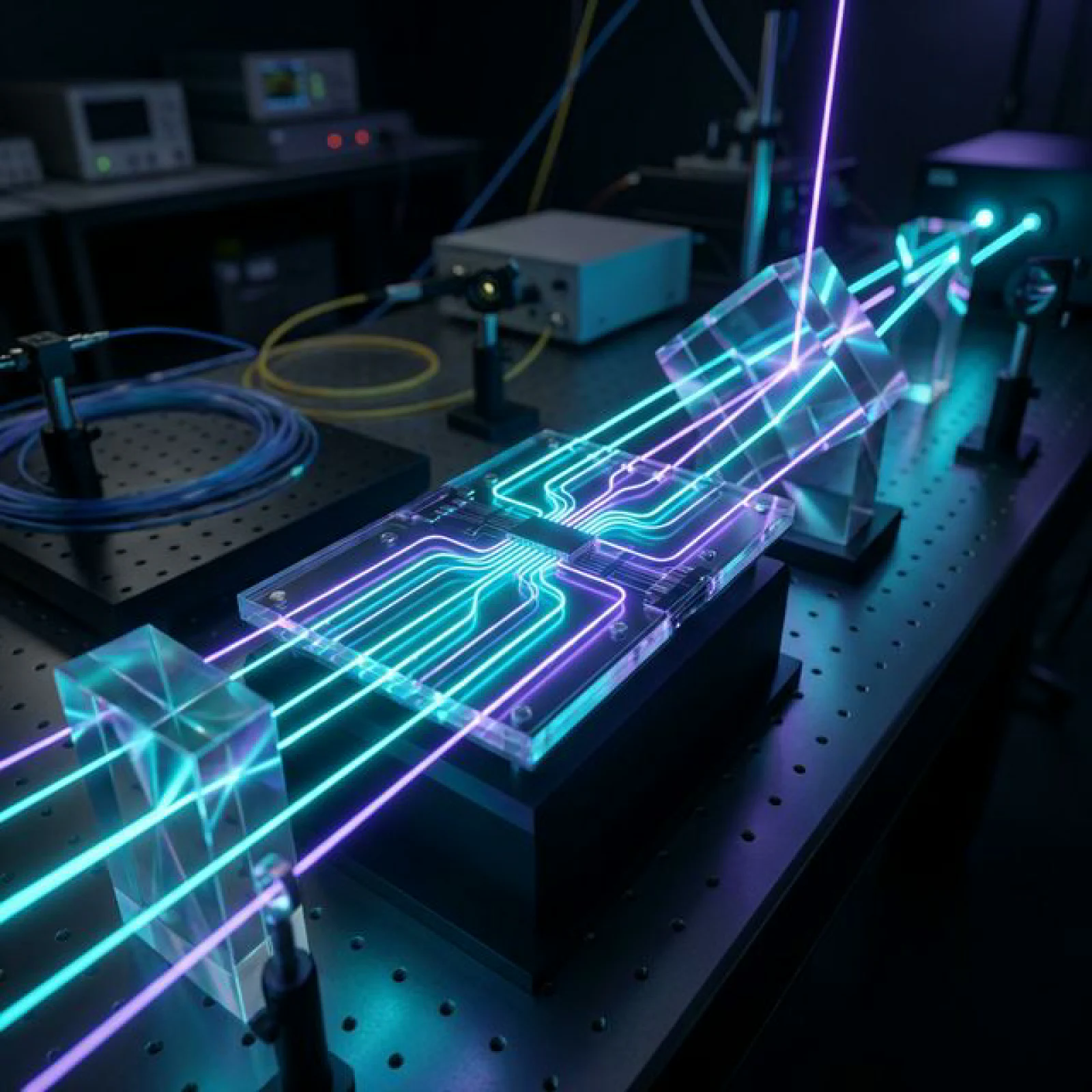
Our interdisciplinary research focuses on novel integrated optical functionality enabled by creative device design, innovative material solutions, and system-level integration, at the intersection of electrical engineering, applied physics, machine learning, and materials science. Similar to an architect designing for functionality for various needs of the professional, personal, or commercial work-space, we at Photonic Architecture Laboratories design, fabricate, and test structures and systems for manipulating light at the scale of billionths of a meter. This allows us to dictate the flow of light for many applications including communications, sensing, computation, data handling, and spectroscopy.

Research Themes
Integrated Photonics
- Ultra-wideband tapers and splitters
- Ultra-low-loss and broadband crossings
- Universal on-chip polarization handling
Photonic AI and Networks
- Deep photonic network architectures
- Learned generative manifolds for nanophotonic design
- Neural-network-integrated photonics
Inverse Design and Optimization
- On-chip arbitrary dispersion engineering
- Data-driven eigenmode expansion
- Optimization of photonic functional blocks
Scalable Photonic Integration
- Intrinsically DRC-compliant design
- Layout-aware and fab-tolerant photonic systems
- Scalable nanophotonic devices and systems
Methodology#
Research at PAL is performed in a cyclic flow, from inception to characterization.
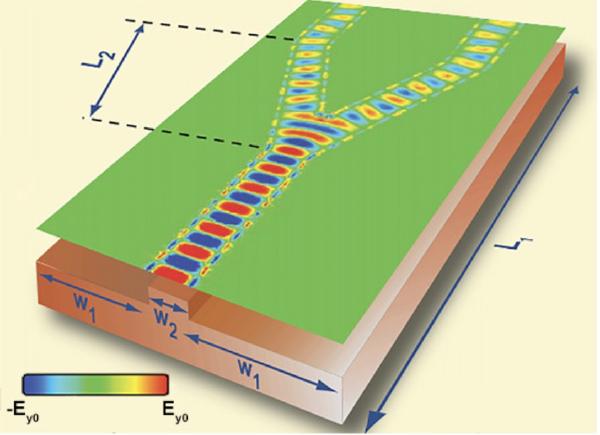
Design and Simulation
A successful photonic device starts with careful specification of the required functionality, and an appropriate design. Our initial models start with an in-depth understanding of how light behaves in various media.
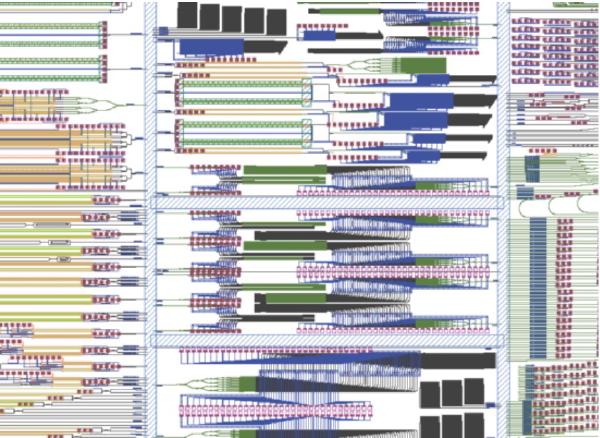
Layout
As photonic architects, we use state-of-the-art tools to convert our designs into masks with nanometer resolution. These masks determine how different layers in the final products will be shaped.
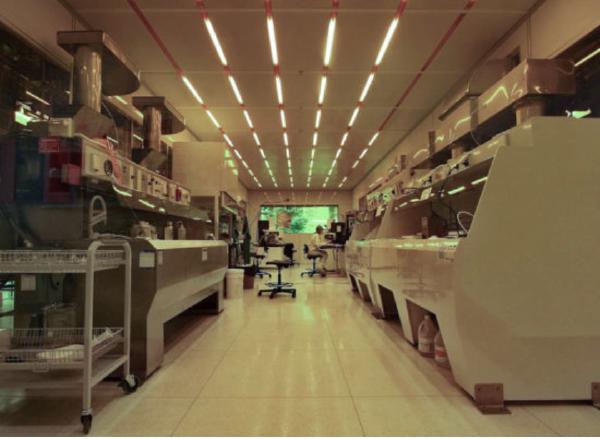
Nanofabrication
Most of our devices are fabricated by industry partners with state-of-the-art silicon manufacturing capabilities. Further in-house fabrication capabilities are also available in the new cleanroom facilities at Koç University.
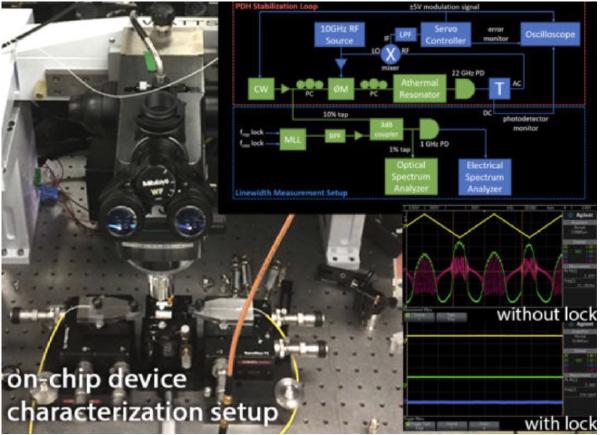
Characterization
Fabricated devices and systems are optically, electrically, and thermally characterized using benchtop, readily accessible equipment in our laboratory.
Frequently Asked Questions#
How does graduate funding work?
Monthly stipends and tuition for full time graduate student members of the lab will be supported either by our lab’s research grants, the Graduate School of Sciences and Engineering, or by their own TUBITAK fellowships. Additionally, for all funded full-time graduate students in thesis programs, Koç University also graciously provides free housing, private health insurance, travel awards, monthly prepaid cards for lunches, and a new laptop at the beginning of their appointment.
If I'm accepted into PAL, what will I work on?
Depending on your prior experience, you will spend your first few months learning the basic design and simulation tools in silicon photonics using our lab’s guide. You will then be working on a small project or a relatively small part of a larger project. As you become more experienced and independent, you will have the opportunity to more significantly contribute to our existing projects, and even possibly work on brand new projects that you come up with.
How is the advisor-student interaction?
Academic and technical development are the most important driving forces behind innovative, creative research, and are the top priority in Photonic Architecture Laboratories. All members of our lab have full access to the necessary resources when they need help. That is why Prof. Magden holds a detailed personal meeting with every student at least once a week, as well as group meetings. More meetings are available by appointment when needed, by contacting Prof. Magden.
I'm interested! How can I apply?
We are constantly looking for highly motivated and curious students with interest and background in optics. Interested students at both graduate and undergraduate levels should directly contact Prof. Magden with their CVs. For full-time graduate study, you will also need to apply through Graduate School of Sciences and Engineering‘s fall and spring applications for M.S. and Ph.D. candidates.